
Your cart is currently empty!
Legato Playing on the Organ
Hello, I’m Mel Windham, composer and owner of Melkim Publishing. And today, I thought I’d describe how to play legato on the organ. I’m going to teach you some tips, tricks, and techniques. And with practice, you can sound great on the organ, whether you’re playing prelude or for congregational singing.
If you are like me, you probably started on the piano, and later transitioned to organ. There are a lot of good techniques that sound good on piano <play a riff on piano> but not so great on organ. <play same riff on organ> Likewise, some things that sound great on organ don’t work so well on piano. <Demonstrate with opening of Bach’s d-minor prelude>
And so, often when a piano player first learns to play organ, it might not sound so great, even if a person is proficient on the piano. But with a couple of tricks, you’ll be on your way.
First, we must realize that there are two main differences between these two instruments. Listen to this. <play low chord and high chord with the sustain pedal depressed>. And now let me play them on organ. <play same chords on organ> Notice any differences?
Difference #1: The piano has a sustain pedal, so when you play a chord and let go, the chord still sounds, like this. <quick demo> But an organ doesn’t have a sustain pedal. Once you let go of a key, the sound simply stops immediately. <quick demo>
Difference #2: If I play a note or a chord on the piano, the sound eventually dies down, even if you use the sustain pedal. <quick demo> But on an organ (play chord), whatever you play keeps playing forever until you let go. <After a while, let go of the chord>. So, how can we use this to play legato on the organ?
First off, you probably already know some legato fingering techniques for piano. We must learn these for legato passages that don’t use the sustain pedal. And guess what? Tip #1) Almost all piano legato techniques work on the organ, too.
This includes playing adjacent notes with different fingers. You simply hold on to the first note and don’t let go until you’ve hit the second note. And this also includes moving your thumb under, like when you play scales. <play a scale slowly> So, if this is all you’re playing with one hand, you’re already there. You won’t need any other tricks. If you practice and plan out the right fingers to use, the notes will come out legato and sound great.
Tip #2) You can use finger substitutions. Chances are, you might already know this one from playing piano. All we do is switch fingers on the same note. Another finger covers the note while the original finger becomes free to play the next note. <demonstrate with a slow scale> In this demo, I only show using the 2nd and 3rd fingers — and yes, if it were just a simple scale, I’d be playing with normal piano fingering. But when you’re playing two notes with one hand, it comes in handy.
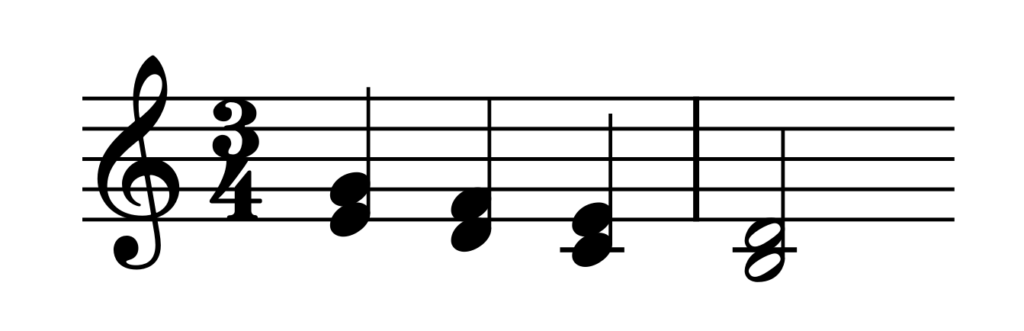
For example check out this run from Faith of Our Fathers <measure 5>. I can use regular piano fingerings for the first three chords, but look — I’ve ended up on fingers 1 and 3. How can I get in the fourth chord? If we were playing on piano, we’d probably play 1 and 2 and no one would notice the difference, but on organ, we’ll hear the sound stop on the lower note when the thumb switches over. But watch, instead, we can have fingers 2 and 4 come in to take over. Then 1 and 3 are free to play the last chord. Here it is again in tempo — watch how fast the substitution happens.
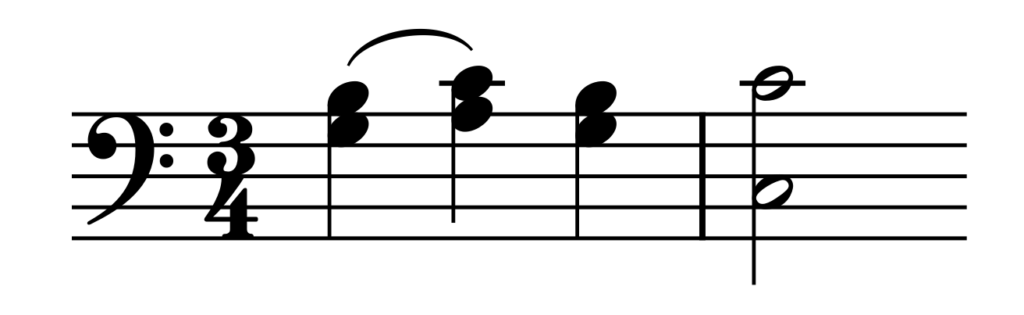
Check out this next figure in the bass, which is a harder substitution <measure 10>. This is a wider stretch. On piano I might do this <don’t use substitution>, but notice how the sound breaks before the last stretch on organ. Instead, I can have finger 3 cover for 4, and now 5 can reach the bottom note easier and make it legato. Of course, if you’re playing bass in the pedal, you wouldn’t have to worry about this stretch, but in some cases you may need to play a keyboard like this without pedalboard, so being able to do this with four voices could be a good skill to practice.
And just to give you a heads-up, in my weekly congregational hymn playing, I’m using finger substitutions in nearly every hymn. I’ve done it so much that my brain can now do it without me even thinking about it. With enough practice, you can do it, too.
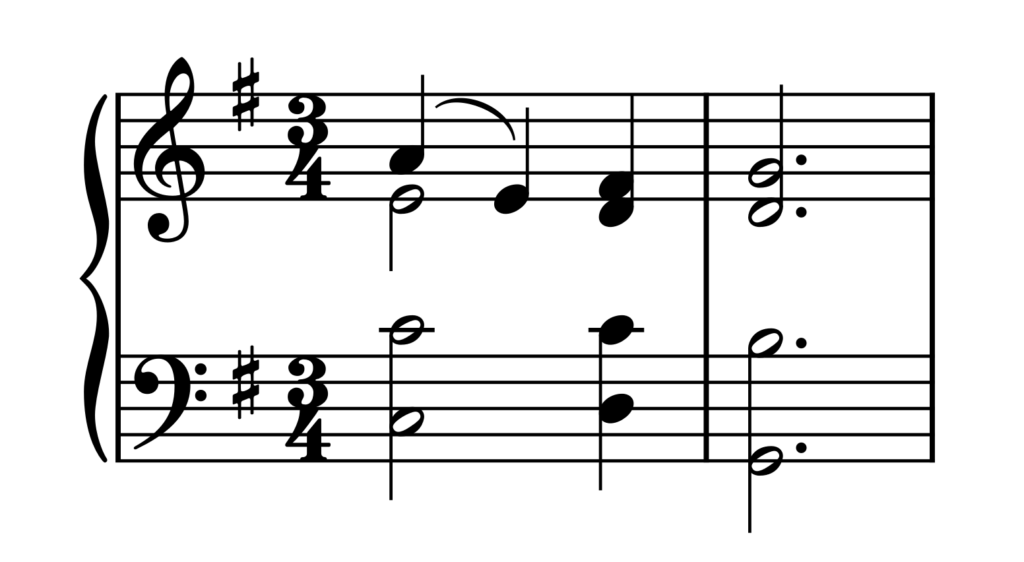
Tip #3) Sometimes redistributing voices between the hands can help the music to be more legato. You may already be doing this on piano. For example, check out the left hand at the end of the second line. I can reach this G and B, however, I can’t seem to play it legato. What I can do is to take that high B with the right hand, and throw in some finger substitutions. Like this … <play it legato>. It’s kind of a complex finger substitution in the right hand, but it works.
This happens a lot — taking the tenor line with the right hand. In rare cases, you can also take the alto note in the left hand.
Up till now, these tips may also work on piano, but now we’re entering the realm of the organ. Tip # 4) Sometimes you can slide a finger between two notes. <show some examples> Sure — you can do this on piano, but it’s much easier on organ because the keys are easier to press. And lightly touching a note sounds just as loud as pushing a note hardly <demonstrate>.
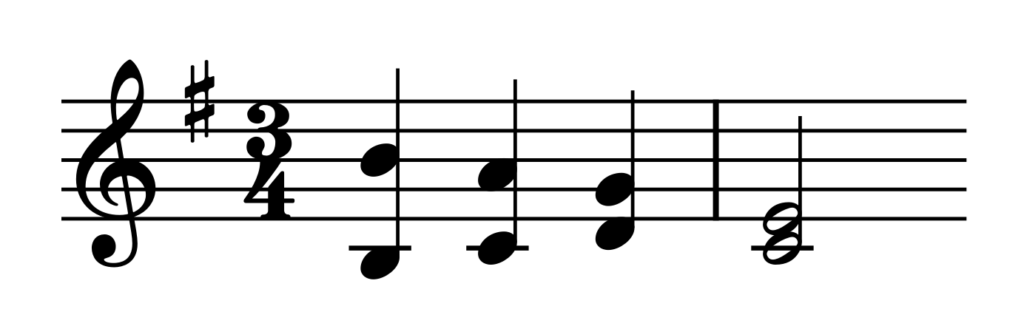
This measure near the end has a big stretch in the right hand, which is too far for finger substitutions — a perfect opportunity for either a finger 1 or 5 glissando. Here it is with a thumb glissando. <demonstrate> And again with a pinky glissando. <demonstrate>
Tip #5) Pedal or Sustained notes can help smooth out the music and make it more legato.
Usually, this is done in the bass, but it can be done in the middle as well: tenor and alto. We typically don’t do it in the soprano, because that’s the melody, and the congregation needs to hear those notes separated.
In other words, if the music has three quarter notes in a row on the same note, you simply play it as dotted half. This serves two purposes.
First, even with all the tips from before, it’s impossible to be legato in between repeated notes. <demonstrate> So, simply don’t repeat it … just like this. <demonstrate> See — now it’s smooth and often easier to play. And the congregation won’t even notice, because they’ll hear the movement in the soprano line.
And second, while the one note is being sustained, you might be able to get away with some choppiness in the other voices. That is, the sustained sound helps all the other parts sound more legato — even if there’s a little bit of space in the other voices.

Here — I’ll play the opening line in the right hand as written. <demonstrate> As you may hear, the alto line doesn’t sound too legato. But now, if we sustain the alto line as we play, it sounds like this: <demonstrate> Much smoother!
Now, before I show the last tip. Let’s talk about this legato thing in general. Sometimes you don’t want to be legato. Like a march, or festive hymn. Most of the time, legato is good, but when the hymn warrants it, it’s okay to go with some staccato — it’s your choice. Whatever sounds good.
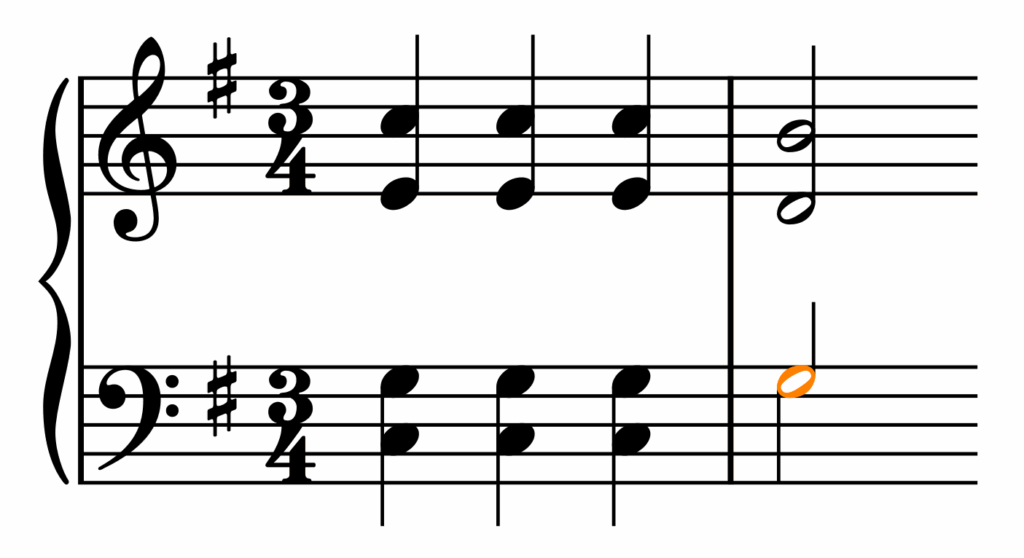
Let’s take this measure in the middle with the same chord three quarter notes in a row. We could play it staccato like this. <demo> Or we could play it as written as legato as possible (but still space in the middle of each note). This time, I’ll sustain the bass. <demo> Okay — it’s sounding more legato. Now let’s try sustaining all of the three bottom voices. <demo> Just for fun, let’s try sustaining all voices. <demo> Ewww … doesn’t quite work. But it shows that we have several different choices — all coming from the decisions of which notes to sustain, and each choice sounds different. Which one would you prefer?
Finally: Tip #6) As a last resort, if you just can’t make it legato, then be quick about it. Maybe they won’t notice the gap. Maybe the other voices will cover it up.
Okay, now I’ll play through the whole hymn, and we’ll see how it goes. And note how this uses all the first 5 tips. <play>
As a bonus, I’ll play something a little harder, which I think will demonstrate Tip #6 as well — if you can catch it. <play it>
I hope that you’ve enjoyed this quick showcase of legato playing tips. As a summary, we’ve learned:
#1) Standard piano legato techniques.
#2) Finger substitutions.
#3) Redistributing voices.
#4) Finger glissandi.
#5) Sustained notes.
#6) Last resort: play the gap quickly.
Thank you for watching. Make sure to like and subscribe. And stay tuned in for more fun videos.
by
Tags:
Leave a Reply